Everything Dancers Need to Know About Preventing Pain and Staying on Stage
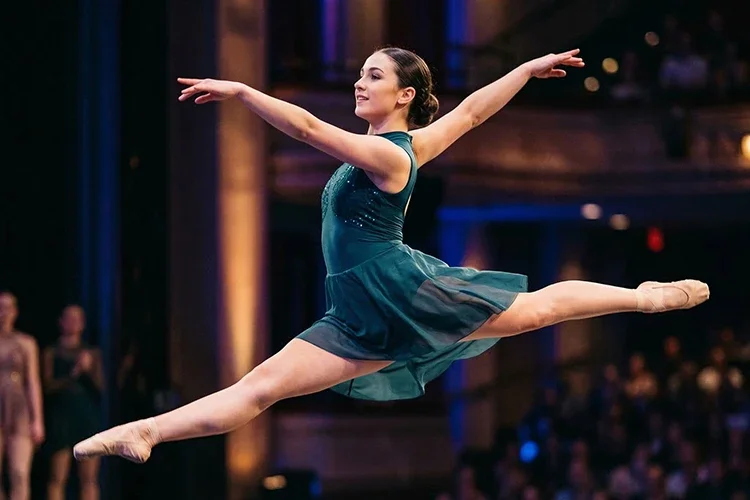
This visual captures the peak physical demand of a grand jeté, highlighting the precise moment where repetitive loading can lead to snapping hip syndrome or stress fractures (Image: AI-generated)
Professional dancers are often described as the ultimate hybrid of artist and elite athlete.
While a football player moves in relatively linear planes, a dancer’s body is required to perform extreme ranges of motion while maintaining perfect stability.
This puts a tremendous amount of mechanical stress on joints and soft tissues that the average person rarely uses to such an extent.
Whether it is the impact of a large soaring jump (grand jeté) or the sustained pressure of standing on the tips of the toes (pointe), the cumulative load on the musculoskeletal system is immense.
Understanding the specific nature of these injuries is essential because a "one-size-fits-all" approach to sports medicine often fails to account for the aesthetic and functional requirements of a dancer’s career.
The Mystery of the Snapping Hip
One of the most common complaints among dancers is a clicking or popping sensation in the hip joint, technically known as snapping hip syndrome.
This often occurs when unfolding the leg in the air (developpé) or when lowering the leg from a high extension. While the sound itself can be startling, it is typically caused by a tight tendon or muscle sliding over a bony prominence in the pelvis.
The most frequent culprit is the iliopsoas tendon, which snaps over the front of the hip bone. If left unaddressed, this constant friction leads to painful bursitis or labral tears, which can sideline a performer for months. Improving core-to-hip coordination is often the key to silencing the snap and restoring fluid movement.
Managing Dancer’s Tendinitis and Foot Pain
The feet and ankles are the foundation of every movement in dance, making them particularly vulnerable to overuse injuries.
Flexor Hallucis Longus (FHL) tendinitis, frequently called "Dancer’s Tendinitis," involves the tendon that controls the big toe. Because dancers constantly transition between flat feet and rising onto the balls of the feet (relevé) or full pointe, this tendon acts like a pulley under high tension.
When the tendon becomes inflamed, it creates a grinding sensation or sharp pain behind the inner ankle bone. Dancers must be cautious because ignoring this pain can lead to a permanent loss of push-off power.
A focused recovery plan including manual therapy is often the most effective way to manage this condition without resorting to invasive measures.
The Hidden Danger of Stress Fractures
Unlike an acute break caused by a fall, a stress fracture is a tiny crack in the bone that develops over time due to repetitive loading.
In the dance world, these most commonly occur in the foot or the lower leg (tibia). The pressure of jumping and landing on hard studio floors—often equivalent to 5 to 10 times your body weight (2.2 kg to 4.5 kg per 10 lbs)—can exceed the bone's ability to repair itself.
If a dancer feels a localized, throbbing pain that worsens with activity and lingers even after a session, it is a significant red flag.
Early detection through diagnostic imaging is crucial to prevent a minor crack from becoming a complete fracture that requires surgical intervention.
Critical Signs You Should Not Ignore
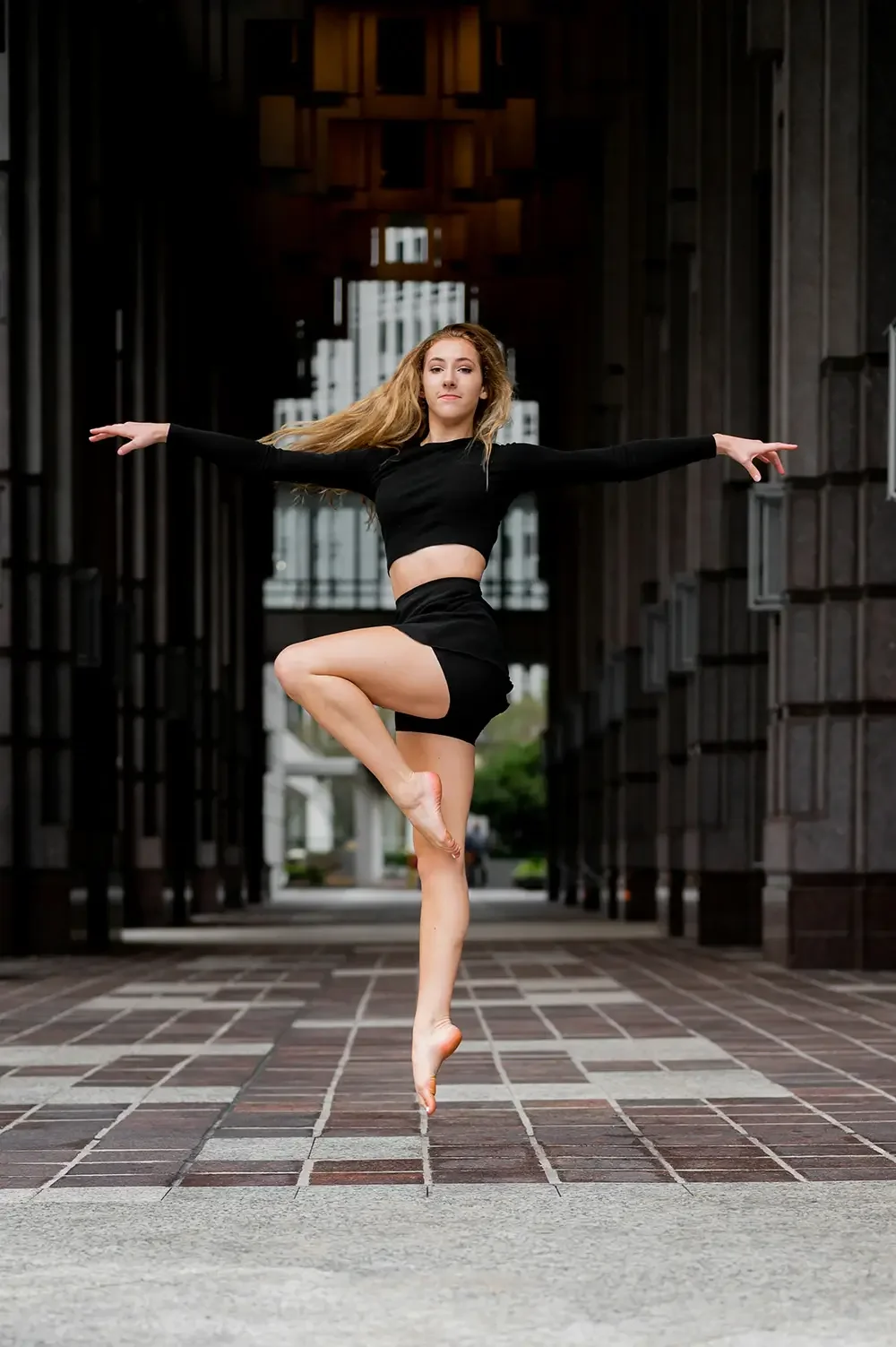
This image emphasizes how subtle pain during such high-stakes positions can indicate underlying issues like FHL tendinitis or early-stage stress fractures. Photograph: Jeffery Erhunse / Unsplash
Determining the severity of a dance injury can be difficult because many performers are trained to work through discomfort.
However, certain symptoms indicate that the body's self-healing capacity has been overwhelmed.
Nocturnal Pain
If your ankle or hip aches enough to keep you awake at night, it often signals significant inflammation or bone stress.
Loss of Technical Range
An inability to achieve a full outward rotation (turn-out) or a deep knee bend (demi-plié) due to sharp pain suggests a structural blockage.
Localized Swelling
Persistent puffiness around the Achilles tendon or the top of the foot that does not resolve with 24 hours of rest.
Compensatory Shifting
If you find yourself changing how you walk or stand to avoid pain, you are likely to create a secondary injury over time in another joint.
The Role of Functional Rehabilitation in Longevity
The goal of rehabilitation for a dancer is the restoration of performance-level function. Non-surgical approaches focus on correcting the mechanical imbalances that led to the injury.
This might involve strengthening the deep rotators of the hip to take pressure off the front of the joint or retraining the small muscles of the foot to better support the arch.
Utilizing soft tissue mobilization and proprioceptive training allows the nervous system to regain control over hypermobile joints.
By addressing the root cause—such as a lack of pelvic stability or poor shock absorption during landings—dancers can return to the stage with more resilience than they had before the injury occurred.
Your Journey Continues Beyond the Pain
Dance is a high-stakes discipline where the body is pushed to its absolute limits. While it is tempting to "push through" the pain to stay on schedule, true longevity comes from knowing when to pause.
To the dancers and the parents supporting them, please view recovery not as a setback, but as a period of essential maintenance for your most important instrument.
Your passion is evident in every movement, and protecting that health is the best way to ensure your artistry continues to shine for years to come.
This post is for educational purposes only. Please read our full Medical Disclaimer here.