The Secret to Sleeping with Back Pain and How Pillow Placement Changes Everything
Investing in proper spinal support during rest is a fundamental step toward long term recovery and preventing chronic back discomfort. (Image: AI-generated)
Getting a good night’s rest is often the hardest part of dealing with a herniated disc or chronic muscle strain. You may find yourself tossing and turning because every position feels like it puts more pressure on your spine.
However, the solution often lies not in a new mattress but in how you use your pillows to support the natural curves of your body.
Proper spinal alignment is the primary goal of any sleep setup.
When your spine is out of position, the muscles stay tense and the discs may experience increased pressure.
By strategically placing pillows, you can create a neutral environment that allows your back to heal while you sleep.
Sleeping on Your Back with Knee Support
For many people, sleeping on the back is the most recommended position for spinal health.
When you lie flat, your lower back naturally arches away from the mattress, which can create tension in the lumbar region.
This tension is often the source of that dull ache you feel after lying down for an hour. To fix this, consider the following adjustments
Place a medium sized pillow underneath your knees to flatten the lower back against the bed
Add a small rolled up towel under the small of your back if you still feel a gap
Keep your head pillow at a height that does not push your chin toward your chest
These simple steps help distribute your weight evenly and minimize the stress on your spinal discs.
The Side Sleeper’s Guide to Hip Alignment

Adopting a neutral side sleeping posture is essential for minimizing nocturnal spinal rotation and ensuring long term musculoskeletal health. Photograph: Slaapwijsheid.nl / Unsplash
Side sleeping is the most common position, but it can be problematic if your top leg pulls your spine out of alignment.
When the top leg falls forward and touches the mattress, it rotates your pelvis and puts a twisting strain on your lower back. You can achieve better alignment by following these tips
Insert a firm pillow between your knees to keep your hips and pelvis square
Pull your knees slightly toward your chest to maintain a flexible spine
Use a head pillow that is thick enough to keep your neck straight and in line with your shoulders
By keeping the legs separated, you prevent the top leg from pulling your spine into a twist, which significantly reduces the risk of nerve irritation.
Why You Should Avoid Stomach Sleeping
Most medical professionals advise against sleeping on your stomach if you have back pain.
This position forces you to turn your head to one side for long periods, which strains the neck and upper back.
Additionally, it causes the stomach to sink into the mattress, creating an exaggerated arch in the lower back that can worsen herniated disc symptoms.
If you absolutely cannot sleep any other way, try these modifications
Place a thin pillow under your lower abdomen and pelvis to lift the hips
Try sleeping without a head pillow to reduce the angle of your neck
Choose a firm mattress that prevents your midsection from sinking too deep
While these changes help, transitioning to side or back sleeping is generally better for long term recovery.
FAQs: About Sleep and Back Pain
-
Adjusting to a new posture often takes about one to two weeks of consistent effort.
Your body has muscle memory tied to your old habits so you might wake up in your original position during the first few nights.
Simply reposition your pillows whenever you wake up and eventually your body will accept the new alignment as the most comfortable state.
-
While many believe a rock hard mattress is best for the back it can actually create pressure points in your shoulders and hips.
The ideal mattress provides enough firmness to support your spine but also has enough cushion to allow your joints to sink in slightly.
If your mattress is too firm adding a thin memory foam topper can provide the necessary balance for better sleep.
-
Minor discomfort or stiffness can occur during the first few nights because you are stretching muscles that have been tight for a long time. However this should not be a sharp or radiating pain.
If the discomfort persists you may need to adjust the height of the pillows you are using between your knees or under your back to better fit your specific body frame.
Choosing the Right Pillow Material
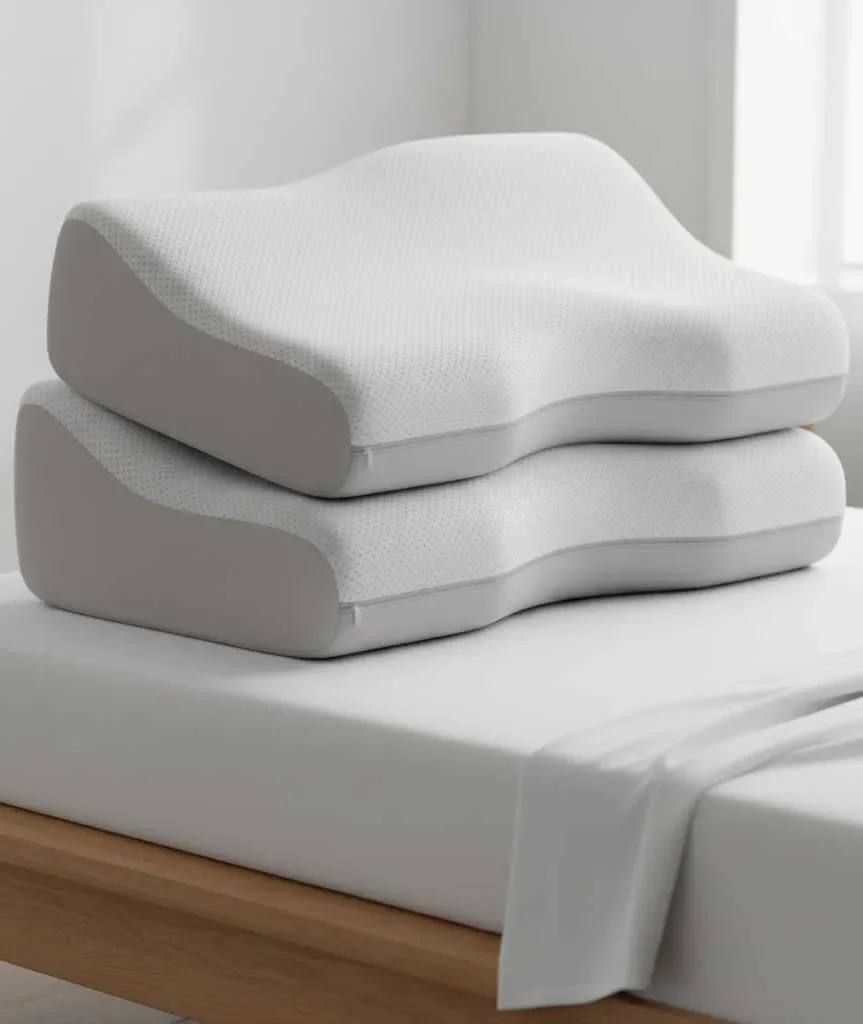
Quality sleep materials are essential investments for long term spinal health and pressure relief. (Image: AI-generated)
The material of your pillow matters just as much as its placement.
A pillow that is too soft will collapse under the weight of your legs, losing its ability to support your alignment. Consider these options for better support
Memory foam pillows that contour to your body and hold their shape
Firm down alternatives that provide consistent elevation throughout the night
Contoured cervical pillows for your neck to ensure total spinal support
When you are setting up your bed tonight, remember that the goal is comfort combined with structural support.
Consistent neutral alignment is one of the most effective non medical ways to manage spinal discomfort.
This post is for educational purposes only. Please read our full Medical Disclaimer here.