Outdoor Running vs Treadmill: Which One Is Better for You?

Enjoying a refreshing run together in a city park — outdoor running boosts both physical and mental well-being.
Whether you’re training for your first 5K or simply looking for a way to stay active, running is truly one of the best ways to care for your cardiovascular health.
In my clinic, patients often ask me a very common question: "Is it better to run outdoors, or should I stick to the treadmill?" My answer is always that there is no single "correct" choice. The right environment for you depends on your personal fitness goals, your preferences, and—most importantly—your current physical condition, such as the health of your joints.
In this post, I’ll break down the pros and cons of each to help you make an informed choice. Let’s find the perfect running environment that keeps you moving safely and happily!
The Benefits of Outdoor Running

A woman runs through a sunlit park, enjoying the physical and mental benefits of outdoor running, including improved muscle engagement, balance, and mood.
Outdoor running offers far more than physical benefits — it supports mental and emotional well-being too.
Running in the fresh air surrounded by trees, sunlight, and open sky can relieve stress and elevate mood.
Specific advantages include:
Engages more muscles due to changing terrain and slopes
Boosts mental clarity and energy from natural light exposure
Improves balance and coordination as your body reacts to uneven ground
Burns more calories because wind resistance and ground variability increase energy expenditure
Feels less repetitive, making it easier to stay motivated
However, outdoor running also has challenges.
Weather, air quality, uneven surfaces, and hard ground like concrete may affect joint health and training consistency.
The Benefits of Treadmill Running
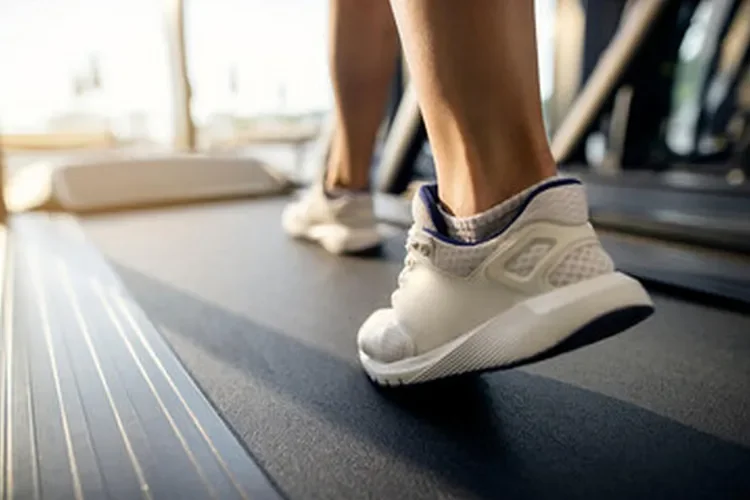
Treadmill workouts offer a safe and consistent way to boost cardiovascular endurance indoors.
Treadmills provide a controlled, predictable environment, making them ideal for people who prefer structured workouts without external distractions.
Softer surface reduces joint impact, especially for knees and ankles
Adjustable speed and incline for targeted training
Accurate tracking of distance, time, and calories
No weather limitations, making year-round training easy
Safer for beginners or those recovering from injury
That said, treadmill running can feel repetitive and mentally less stimulating.
You also activate fewer stabilizer muscles since the belt moves underneath you.
Key Differences at a Glance
Outdoor running tends to burn more calories because wind resistance and ground variability increase energy expenditure, while treadmills generally result in slightly lower calorie burn.
Outdoor running
Generally creates more impact on your joints because of harder surfaces like concrete and asphalt, while treadmill running provides lower impact thanks to cushioned decks.
When running outside, you naturally activate more muscles due to varied terrain and inclines.
On a treadmill
Muscle activation is more moderate because the surface is flat and predictable.
In terms of convenience, outdoor running depends heavily on weather and seasonal conditions, while treadmill running allows for consistent, year-round training regardless of the environment.
Mentally, running outdoors offers more stimulation from sunlight, scenery, and fresh air, whereas treadmill running can feel less engaging due to the indoor setting.
When it comes to injury risk, outdoor runners face a higher chance of missteps due to uneven terrain, while treadmills offer a safer, even surface that lowers the likelihood of trip-related injuries.

A woman runs along a road with scenic mountains behind her, illustrating the physical and mental benefits of outdoor running. Photograph: Unsplash
So, Which One Should You Choose?
If you crave fresh air, changing scenery, and a natural running experience, outdoor running might be your best fit. On the other hand, if you are recovering from an injury or need a controlled environment to minimize joint impact, the treadmill is a fantastic alternative. In fact, many of my patients find that combining both styles allows them to enjoy the best of both worlds.
Ultimately, the "best" choice is whatever keeps you moving comfortably, consistently, and—above all—safely.
If you ever experience knee pain, back discomfort, or joint stiffness while running, please don't push through the pain. I encourage you to consult a healthcare provider specializing in sports injuries and biomechanics. Personalized care tailored to your unique body can make a world of difference in your performance and your long-term recovery.
This post is for educational purposes only. Please read our full Medical Disclaimer here.